-
 Call Now ! +2348033205357
 -
 Email Now [email protected]

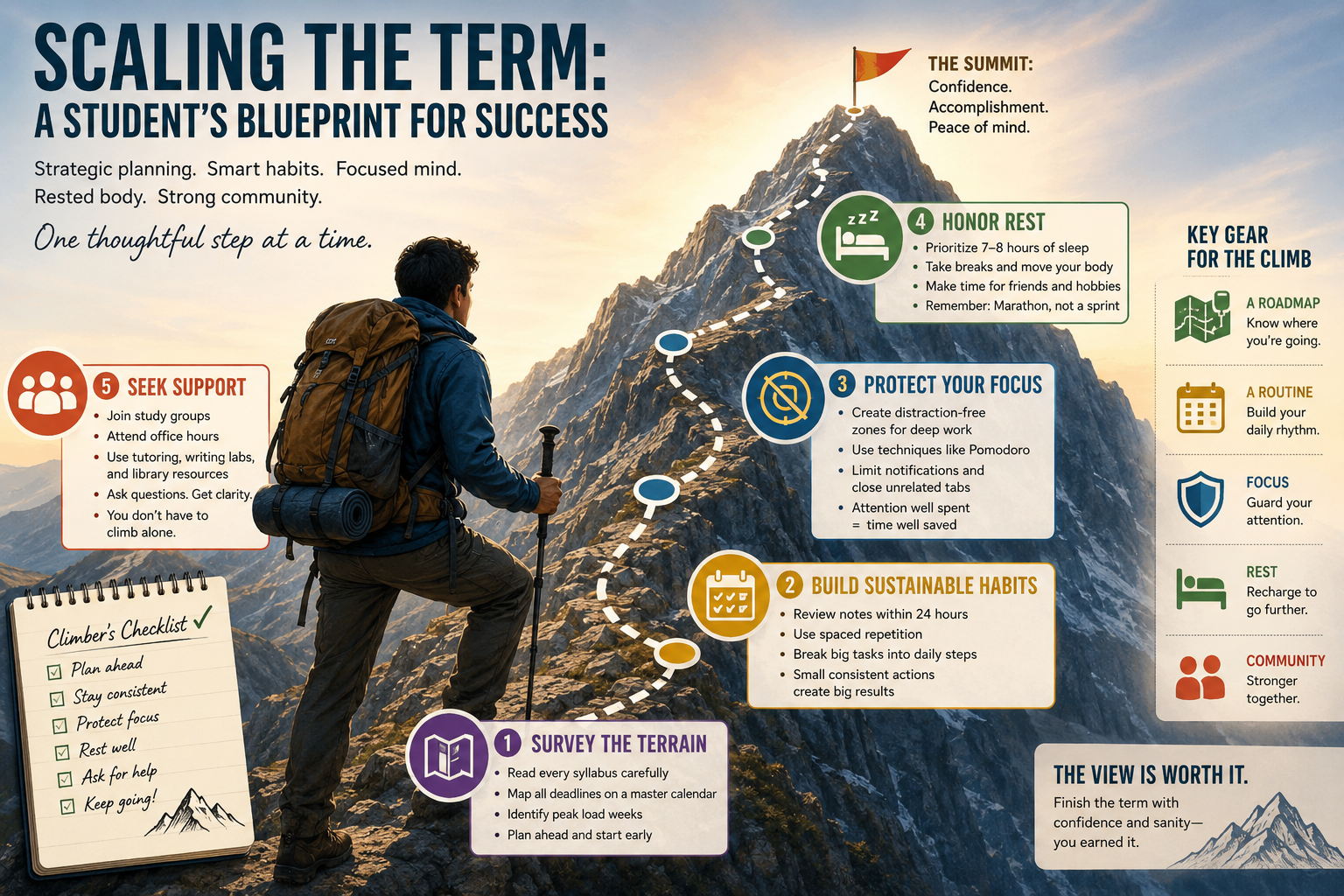
The start of a new academic term often feels like standing at the base of a mountain. The peak—final exams, final grades, the sweet relief of vacation—seems impossibly distant, shrouded in a haze of syllabi, assignments, and expectations. For many students, the initial climb is energetic, but by mid-term, fatigue sets in, and the summit feels unattainable. Yet, scaling through the term successfully is not about Herculean effort or sleepless nights. It is a strategic exercise in mindset, organization, and self-care. The student who thrives is not simply the one who works hardest, but the one who works wisely.
The first step in any successful ascent is surveying the terrain. Before the term gains momentum, a student must become intimately familiar with the syllabus of each course—not as a bureaucratic document, but as a roadmap. Transforming that roadmap into a personal master calendar is essential. By plotting every quiz, paper, midterm, and project deadline at the outset, the student transforms a chaotic collection of demands into a manageable timeline. This foresight allows for the identification of “peak load” weeks, where multiple deadlines converge. Recognizing these danger zones early empowers the student to begin working on major projects weeks in advance, chipping away steadily rather than panicking in a last-minute scramble.
With the map in hand, the next phase is establishing a sustainable rhythm of daily and weekly habits. Cramming is the enemy of retention; consistent, spaced repetition is the ally. A powerful strategy is to implement a simple rule: review lecture notes within twenty-four hours for just fifteen minutes. This small investment dramatically improves long-term memory. Similarly, breaking larger assignments into bite-sized, non-negotiable daily tasks prevents procrastination. Instead of being haunted by “write a ten-page paper,” the student focuses on “spend one hour researching tonight.” This shift from daunting goals to actionable systems
Comments
No comment added yet